Intro
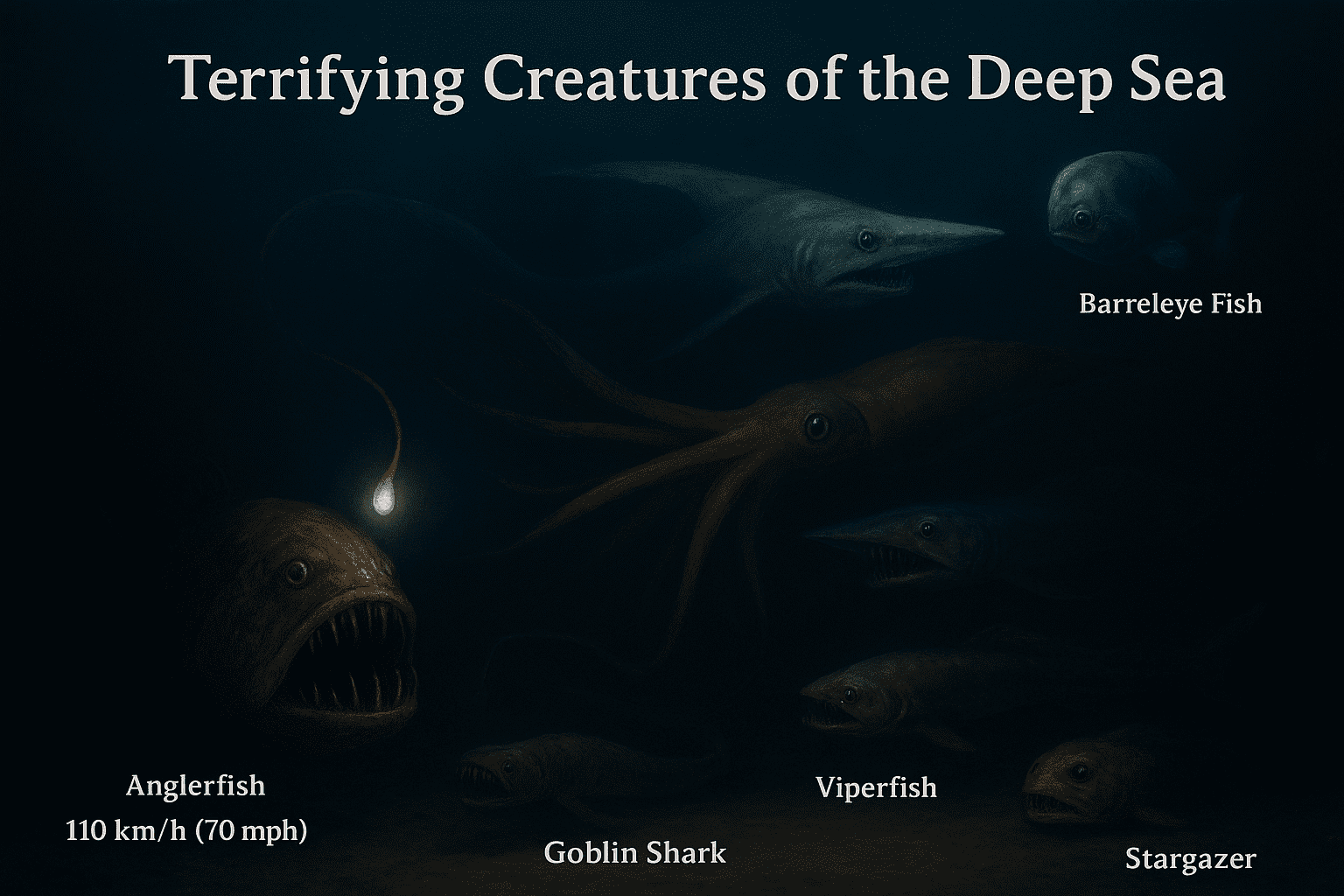
There are a variety of strange and frightful creatures in the ocean’s depths that look like they belong in a horror film, but they are all very real. These animals have evolved amazing adaptations to survive in crushing pressures and complete darkness, ranging from squid that can turn themselves inside out to fish with bioluminescent lures and needle-like teeth. Get ready to meet some of the most terrifying creatures that you most likely never knew existed in the ocean.
A world more strange and horrifying than any science fiction tale can be found beneath the waves. In the gloomy depths of the deep sea, far beyond the bright shallows, lie monsters so strange and terrifying that they appear to have come from another planet. Few people have ever witnessed the horrors that the ocean conceals, from fish that entice prey with glowing traps to translucent predators with rows of needle-like teeth. These are the most terrifying creatures you’ve never heard of in the ocean, and they’ll make you reconsider going too far.
Anglerfish
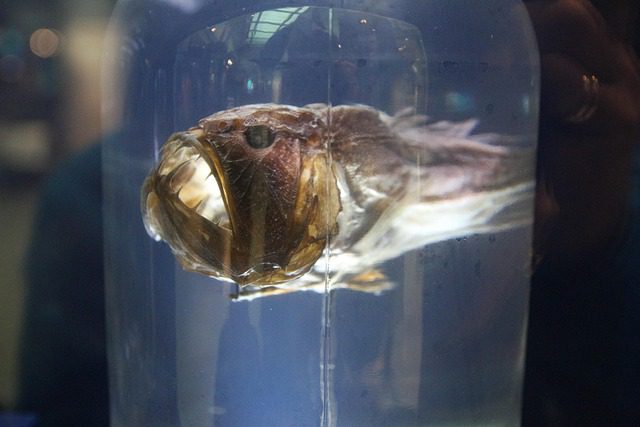
The anglerfish is a nightmare come true and one of the most notorious creatures of the deep. This eerie predator, which lives thousands of feet below the ocean’s surface where sunlight never reaches, has a built-in lure: a glowing orb that hangs from a spine protruding from its forehead. The anglerfish’s wide mouth, filled with sharp teeth, attracts unsuspecting prey to the light and then swallows them whole. Even more unsettling is the fact that in certain species, the small males merge with the larger females, essentially turning into living attachments whose sole function is to produce sperm. From the deepest reaches of the ocean comes this gory tale of love.
Giant Squid
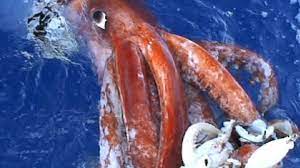
For centuries, tales of the sea monster known as the Kraken have been sparked by the legendary giant squid (Architeuthis dux), which inhabits the deep ocean. Males can grow up to 10 meters (33 feet) from fin to tentacle tip, while females can grow up to 12 meters (39 feet), making this enormous invertebrate one of the biggest creatures on the planet. Living in the enigmatic, dark depths far from the surface, they are rarely seen despite their enormous size. The majority of our knowledge about them is derived from dead specimens that have washed up on the coast or, less frequently, from archival photos and videos taken in their natural environment.
With eyes up to 25 cm (10 inches) in diameter, the giant squid has the largest eyes in the animal kingdom. This enables it to absorb the most light possible, enabling it to detect predators and prey in the dark. Its two long tentacles, equipped with strong, serrated suckers, are used to catch deep-sea fish and other squid, and then the food is brought to a parrot-like beak for shredding. The sperm whale is their main predator, and it is thought that conflicts between these two titans of the deep cause the whales to become scarred.
Goblin Shark
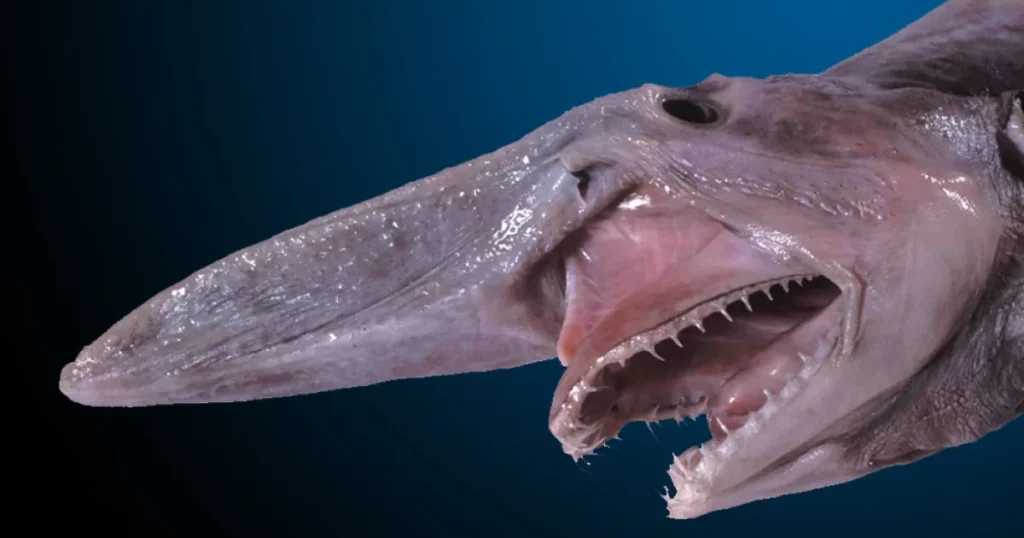
The goblin shark (Mitsukurinaowstoni) is a “living fossil” that lives in the deep sea and is renowned for its strikingly ancient appearance. With a long, flat, sword-like snout that hangs over a jaw full of sharp, nail-like teeth, it is an incredibly strange-looking animal. Its jaw is tucked under its head when it is at rest, but when it feeds, its most hideous feature is exposed. In order to snatch prey, the goblin shark uses elastic ligaments to “slingshot” its entire jaw forward at a remarkable speed, making it the shark with the fastest jaw protrusion known to man. The goblin shark’s long, sensitive snout is covered in electroreceptors called ampullae of Lorenzini, which enable it to detect the weak electrical fields produced by other animals in the dark abyss where it lives.
Viperfish
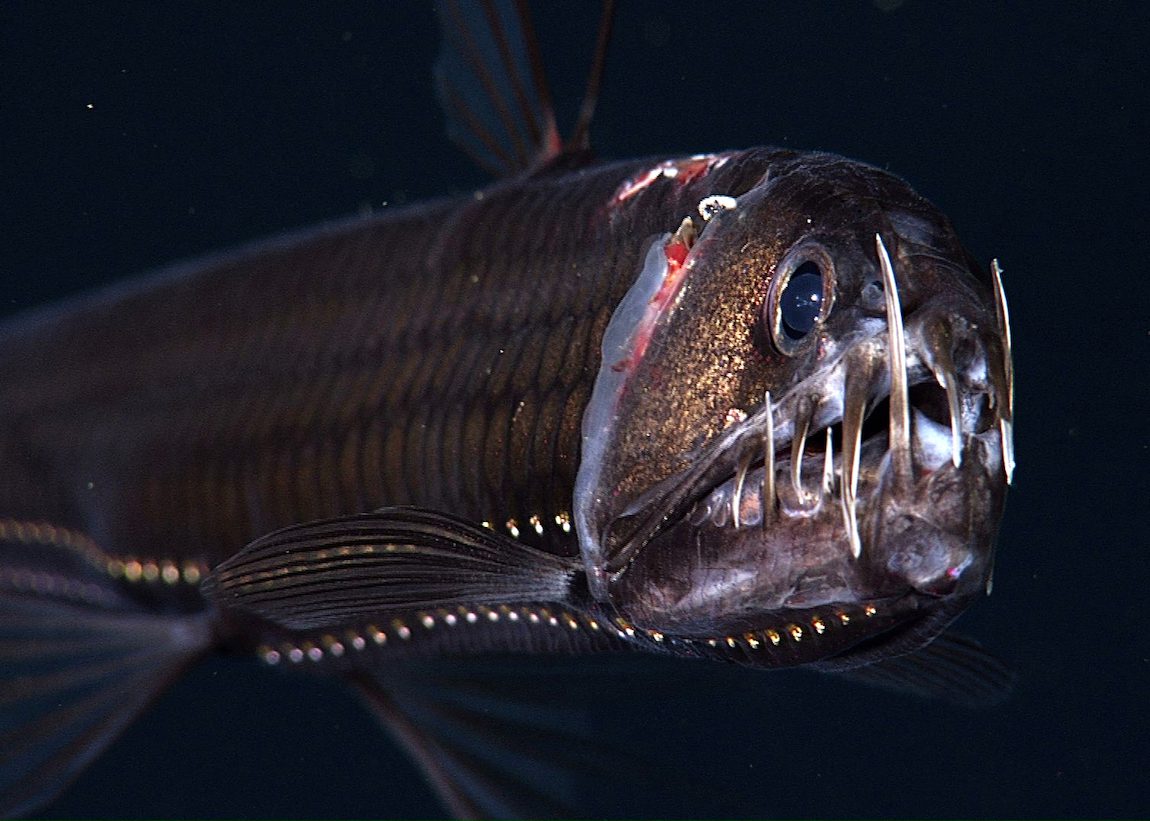
One of the most formidable predators in the ocean, viperfish are well suited to living in the dark, deep abyss. Its long, thin body conceals a mouth full of dagger-like teeth that, when closed, are too big to fit inside, forcing them to curve dangerously around its head. The viperfish attracts unwary prey with a bioluminescent lure that glows from the end of its dorsal spine before launching a swift strike. This animal is one of the most terrifying predators of the deep sea despite its diminutive size due to its skeletal build and brutal hunting methods.
Known for its vicious hunting methods and ominous appearance, the viperfish (Chauliodus) is a fearsome deep-sea predator. This creature, which can be found in both temperate and tropical oceans around the world, is distinguished by its large head, hinged jaw, and mouth full of long, needle-like teeth. When the jaw is closed, the fangs—especially the two lower ones—are too long to fit inside the mouth and curve upward toward the eyes. To draw gullible smaller fish and crustaceans into striking range in the shadowy abyss, the viperfish uses a long, bioluminescent dorsal spine that is tipped with a photophore.
Frilled Shark
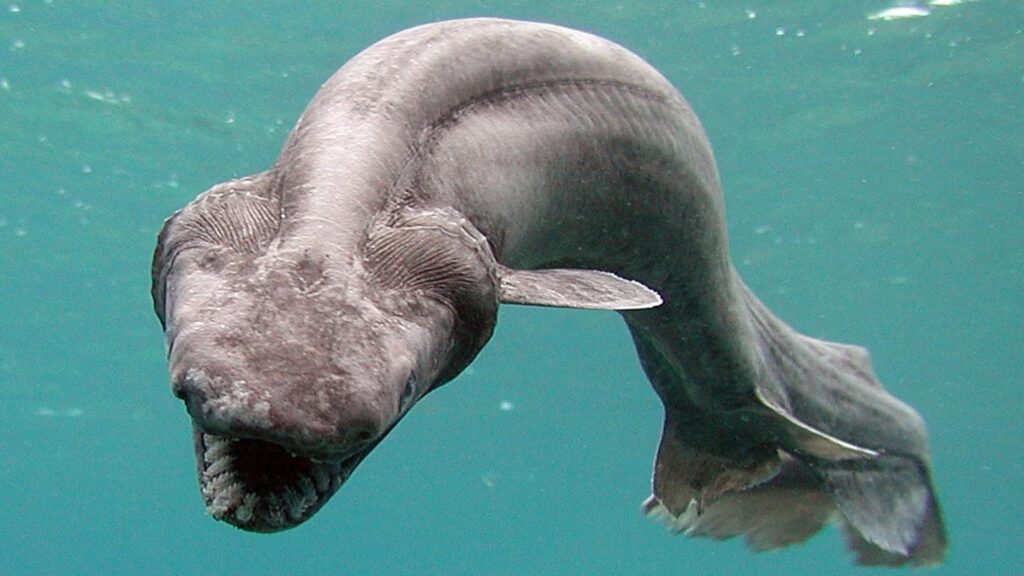
With a body that hasn’t changed in millions of years, the frilled shark is a living dinosaur. It glides through the deep sea. It looks genuinely prehistoric and terrifying due to its eel-like shape and large mouth, which is filled with 300 needle-shaped teeth that face backward. The frilled shark slithers and strikes during hunting, engulfing its prey before it can flee. The fact that this elusive predator is rarely seen by humans serves as a reminder that there are animals in the ocean that seem to have vanished over time.
Stargazer
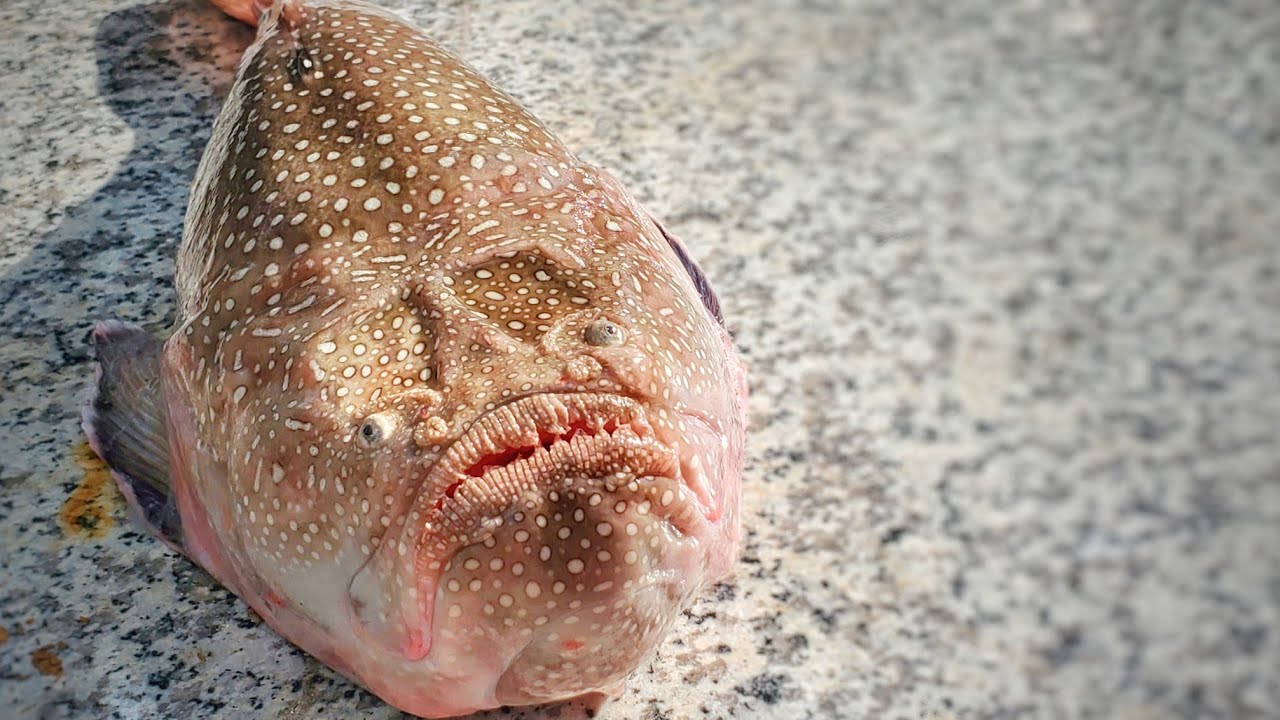
A master of ambush and camouflage, the stargazer (((Uranoscopidae)ets its name from its peculiar habit of burying itself in the sand or mud with only its mouth and upturned eyes exposed. This creates the illusion of harmless ocean floor sediment, which attracts small fish, crustaceans, and other prey directly into its striking zone. It is perfect for this predatory tactic because of its flattened body, broad pectoral fins that act as shovels, and nostrils and gills on top of its head that prevent them from becoming clogged with sand. The stargazer’s upward-facing, wide-open mouth completes its ominous appearance and allows it to quickly eat gullible prey that fly by overhead.
Barreleye Fish
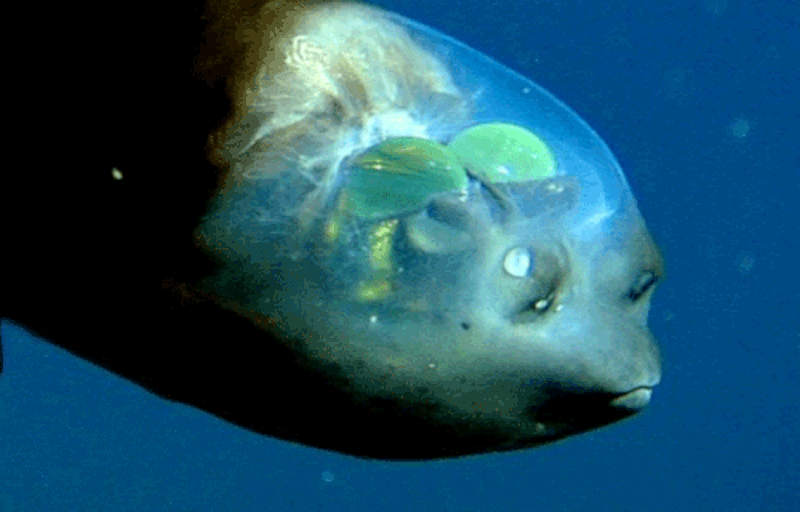
The barreleye fish is one of the strangest and most disturbing creatures ever discovered in the deep sea. Its brain and tubular green eyes, which can move forward to track prey directly or upward to spot it above, are literally visible through its transparent, dome-shaped head. The barreleye floats still in the dark depths, using its extremely sensitive vision to detect the faint silhouettes of drifting jellyfish and small fish. Its spectral appearance, a cross between an alien and a failed experiment, reminds us of the strangeness and unearthliness of deep-ocean life. Explore more on this topic by National Geographic
You might also be interested in reading:
4 Amazing Reasons Why Penguins Don’t Feel Cold
Conclusion
The deep, mysterious waters of the ocean are home to a menagerie of creatures more hideous and frightful than any monster in folklore. The anglerfish lures prey to its fanged mouth with a bioluminescent rod, while the giant squid, a real-life Kraken, silently stalks the depths with its enormous eyes and serrated suckers. With their rows of backward-pointing teeth and sudden, jaw-extending strikes, the goblin shark and frilled shark, sometimes called “living fossils,” evoke ancient horrors. The viperfish’s needle-like fangs and the stargazer’s venomous, electrified ambush from the seafloor show that even small animals can be lethal.