Intro
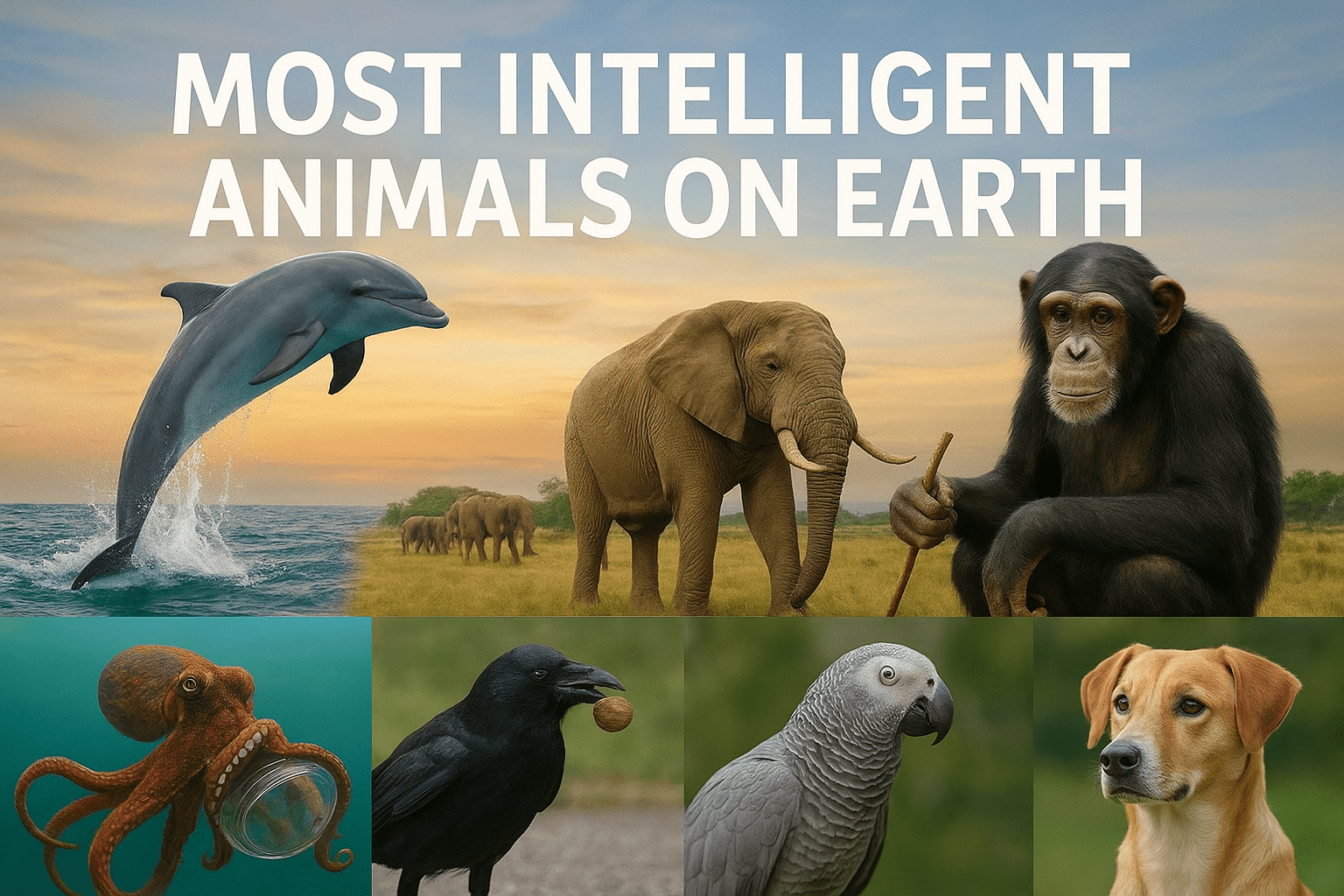
Since each species excels in a different way, it is difficult to identify the most intelligent animal. Nonetheless, a number of animal species exhibit exceptional cognitive capacities through sophisticated social structures, sophisticated communication, problem-solving, and tool use. Primates, especially chimpanzees and orangutans, are known for their intelligence. They demonstrate sophisticated social learning and use sophisticated tools for foraging; some have even been trained to use sign language. Dolphins, orcas, and other cetaceans in the ocean display remarkable intelligence, including self-awareness, sophisticated communication using distinctive dialects, and sophisticated cooperative hunting techniques. In addition to mammals, other groups also demonstrate exceptional mental capacities.
Corvids, a family of birds that includes crows, ravens, and magpies, are exceptional problem solvers because they can create tools, understand cause and effect, and remember human faces. The most intelligent invertebrates, octopuses, are known for their agility in solving puzzles and escaping cages, and they are skilled at disguise because of a nervous system that is distributed throughout their brain and tentacles. Elephants have excellent recall, empathy, and complex problem-solving abilities, and they use long-term spatial memories to navigate and grieve for their deceased. Pigs have a high IQ, and they can also learn challenging skills like playing video games and have empathy for other animals.
Dolphins
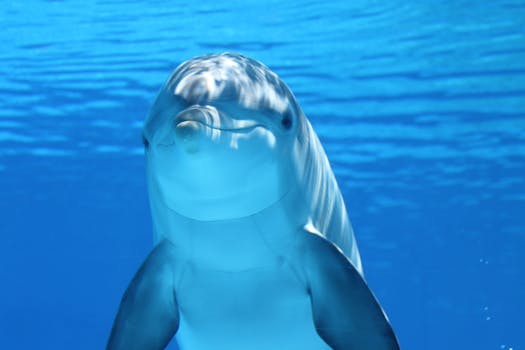
Dolphins are gregarious, highly intelligent marine mammals with sophisticated social structures and a sophisticated communication system. They are arranged in a dynamic “fission-fusion” society akin to that of humans and chimpanzees, and they live in groups called pods, which can contain anywhere from a few individuals to over 1,000. Dolphins in these pods develop close, enduring relationships, work together on activities like hunting, and have even been seen tending to the sick and injured.
Chimpanzees
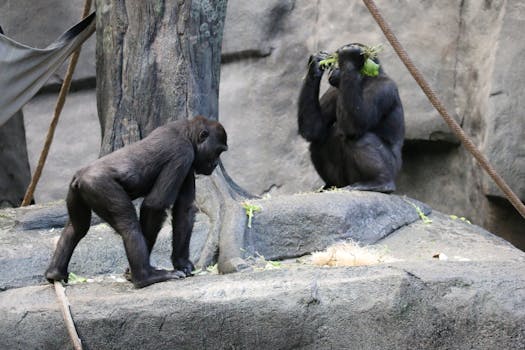
In their forest and savanna habitats throughout Africa, chimpanzees—one of humanity’s closest living relatives—display exceptional intelligence and sophisticated social behaviors. They travel in smaller, transient groups to forage while preserving stronger social bonds within their vibrant “fission-fusion” societies, which can have up to 150 members. The complex alliances and dominance hierarchies that underpin this fluid social structure are frequently formed by males through grooming and other behaviors. Chimpanzees’ skillful use and adaptation of tools, such as their ability to hunt small mammals with sharpened sticks, “fish” termites by removing leaves from twigs, and chew leaves into sponges to absorb water, are examples of their intelligence.
They use a wide variety of facial expressions, gestures, and vocalizations as part of their sophisticated communication skills. In addition to their innate behaviors, chimpanzees can learn from one another, leading to distinctive cultural practices that are transmitted from generation to generation in relation to foraging and tool use. Research has also revealed complex psychological traits, including the ability to understand cause and effect, deceive others, and even display empathy and grief. Captive chimpanzees have shown their cognitive prowess by learning to use symbolic systems and sign language to communicate. In addition to having a strong sense of self and the ability to “mental time travel,” which enables them to make plans for the future, they also passed the mirror test.
Elephants
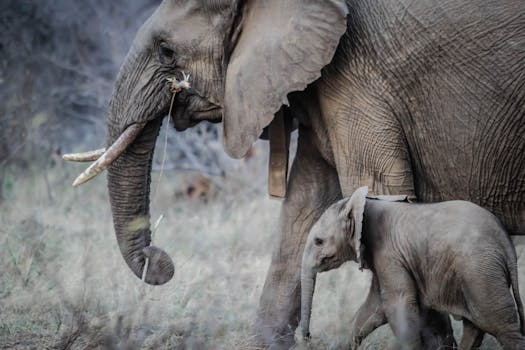
Elephants’ renowned intelligence is a result of their intricate social structures, profound emotional depth, and exceptional cognitive capacities. They have the largest brain of any land animal and live in close-knit, matriarchal herds led by the oldest and most experienced female. This matriarch’s remarkable long-term memory, which enables her to recall long-distance watering holes and historic migratory routes—knowledge that has been passed down through the generations—is essential to the herd’s survival. Elephants can use tools like branches to swat flies or dig for water to solve complex problems. They communicate using a range of vocalizations, from low-frequency rumbles that reverberate through the earth and can be heard for miles from their feet to trumpets for excitement.
Crows
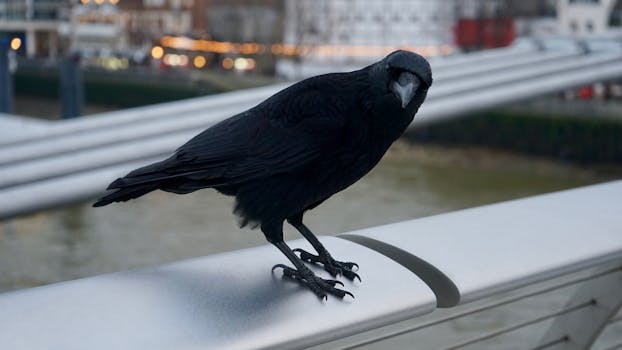
Given their exceptional problem-solving abilities, adept use of tools, and sophisticated social behaviors, crows are regarded as one of the most intelligent animals. Like great apes, they belong to the corvid family and have a large brain-to-body ratio, which allows them to have sophisticated cognitive abilities. They demonstrate their inventiveness in a number of ways, such as by dropping nuts on a busy road and waiting for cars to pass over them in order to crack them. A rare ability among non-primate animals is the ability of certain New Caledonian crows to make their own tools, such as hooked sticks for gathering insects from trees.
Octopus
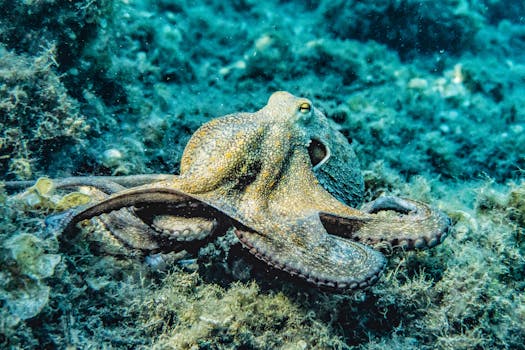
Of all the invertebrates, octopuses are thought to be the most intelligent. Their extraordinary cognitive capacities have captivated scientists. With a large, centralized brain and smaller “mini-brains” in each of their eight arms, their highly complex nervous system is uniquely distributed throughout their body, contributing to their intelligence. Because of their decentralized nervous system, which gives their arms some degree of autonomy, they are excellent problem solvers and escape artists who have been known to break out of aquarium tanks, open jars, and navigate mazes.
Tool use is another example of their remarkable intelligence, which is uncommon among invertebrates. For instance, it has been observed that the veined octopus carries the halves of coconut shells for use as a mobile and protective shelter. In order to blend in with their environment, octopuses also display complex and quick camouflage, which calls for sophisticated visual processing. This involves altering both the color and texture of their skin. Octopuses exhibit play behavior and the capacity for observational learning in addition to their problem-solving and camouflage abilities. They can identify specific people and develop preferences thanks to their short- and long-term memory; some of them will even squirt water at people they don’t like.
Dogs

Since they have lived alongside humans for thousands of years, dogs have developed a wide range of cognitive skills that have earned them a reputation for intelligence. Their unique social-cognitive skills, which distinguish them from other highly intelligent mammals like great apes, enable them to understand and interact with human behavior on a profound level. Three main types of intelligence can be distinguished in dogs: instinctive (what they were bred for), adaptive (problem-solving), and working/obedient (what they learn from human instruction). The average dog has the mental capacity of a two-year-old child and can learn over 165 words and gestures, according to research.
Parrots
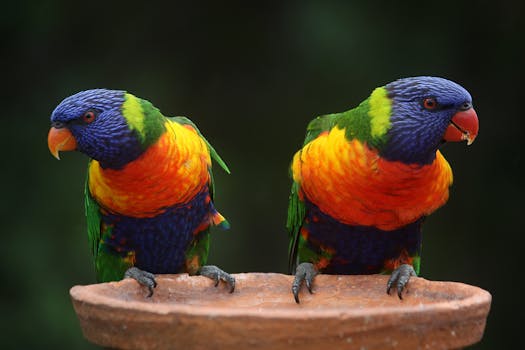
Parrots are among the most intelligent birds, with their cognitive abilities and social complexity often compared to those of primates and dolphins. Known for their ability to mimic human speech, parrots are bright, colorful, gregarious birds that live in tropical regions all over the world. They live in flocks, usually in trees, and have powerful, curved beaks for eating fruits, seeds, and plants as well as cracking nuts. Macaws, cockatoos, and African greys are a few common species, and many are kept as pets. explore more from sentientmedia.org
Don’t miss this related post:
5 Animal Facts That Sound Fake but Are True
5 Birds with Extraordinary Talents
4 Weird Animal Habits You Won’t Believe
Conclusion
In conclusion, many animals demonstrate extraordinary intelligence through their complex social structures, problem-solving abilities, and tool use; however, due to their highly developed cognitive capacities, such as communication and self-awareness, dolphins, orangutans, and chimpanzees usually rank highest on the list. The distinctive qualities of other highly intelligent species, such as African grey parrots, crows, and elephants, show that intelligence is a diverse trait that has evolved in many different forms throughout the animal kingdom. These species are characterized by sophisticated reasoning, complex communication, and remarkable memory.