Intro
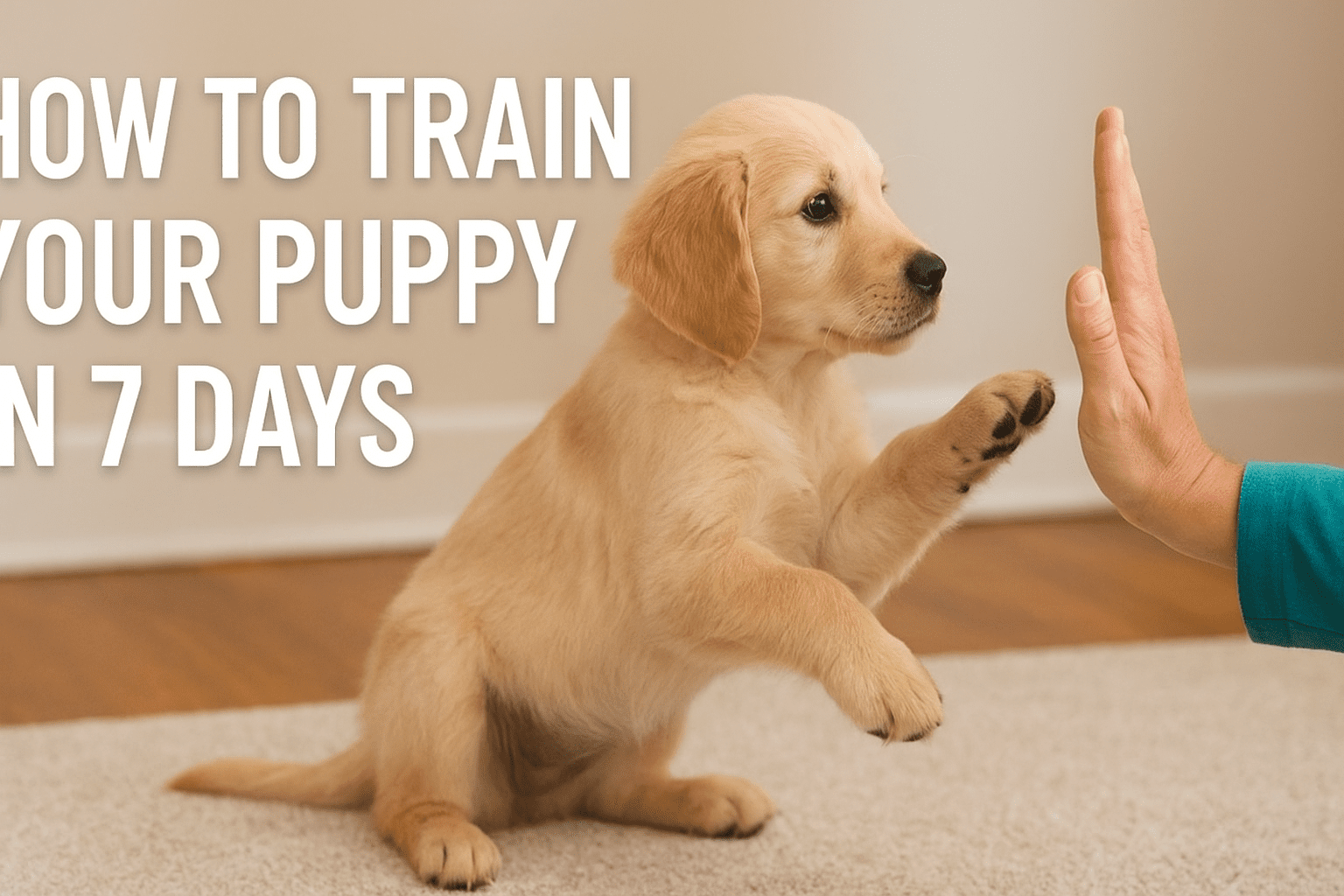
Although bringing a new puppy home is an exciting experience, it also carries the significant responsibility of training them to be a well-mannered family member. Like tiny sponges, puppies pick things up quickly, especially during the first few weeks of life. In just one week, you can establish the groundwork for positive behavior if you take the appropriate approach and are consistent. In just seven days, you can begin training your puppy with the help of this guide, which will help you form a close bond with your pet and prepare them for success for the rest of their lives.
Set Routine
To give stability and lessen anxiety, a dog’s regular routine, such as “oset,” should include a predictable timetable for necessary activities like eating, potty breaks, exercise, and rest. A typical routine consists of a planned mealtime after a morning playtime and potty break. More naps, training sessions, and breaks are added throughout the day to provide regular opportunities for rest and relief—especially crucial for puppies who are still learning what to expect. To make sure all needs are satisfied and the dog feels safe, the evening routine consists of dinner, a last bathroom break, and bedtime.
House Training
One of the most crucial aspects of raising a contented, well-behaved puppy is house training. Patience and consistency are essential for success. To begin, take your puppy outside often to the same spot for potty, especially after eating, drinking, waking up, or playing. To encourage good behavior, give them praise and a reward right away when they use the restroom outside. To aid in your puppy’s routine development, maintain a regular feeding and potty break schedule. Instead of punishing your puppy for mishaps that occur indoors, thoroughly clean the area to get rid of any residual scent and gently guide them to the proper location the next time. By encouraging your puppy to hold it until they are taken outside, a crate can also aid in house training.
Basic Commands
One of the most important steps in raising a happy and well-behaved dog is teaching your puppy basic commands. In addition to keeping your puppy safe, commands like “sit,” “stay,” “come,” “down,” and “leave it” also help you two communicate better. To help your puppy understand what you want, start with one command at a time and use hand signals in conjunction with clear, consistent words. As soon as your puppy responds correctly, you should always use positive reinforcement, which includes petting, verbal praise, and treats. To keep your puppy’s attention and prevent overstimulation, keep training sessions brief—five to ten minutes.
Positive Rewards
One of the most efficient and compassionate methods of training your puppy is to use positive reinforcement. By giving your puppy treats, praise, toys, or affection right away whenever they obey a command or display desired behavior, you can promote good behavior in them. Your puppy will be more likely to repeat good behavior if you use positive reinforcement to help them link it to enjoyable results. Over time, positive reinforcement strengthens your bond, increases your puppy’s sense of self-worth, and encourages them to behave well in training and everyday situations.
Avoid Punishment
Instead of punishing a dog for bad behavior, use positive reinforcement to teach them good behavior. Instead of punishing, teach your dog what you want them to do right away by using techniques like distraction and redirection. When they succeed, reward them with praise or treats. This strategy helps avoid problems like fear, anxiety, and aggression that can result from punitive methods while fostering a solid bond based on trust.
Why not get punished?
exacerbates anxiety and fear: In addition to not addressing the underlying cause of a dog’s behavior, punishment can make them fearful and anxious. Relationship damage: The bond and trust between you and your dog may be weakened by punishment.
Daily Practice
Dogs are devoted and perceptive household pets that are well-liked all over the world and are regarded as man’s best friend. They can hear frequencies that are inaudible to humans, have an excellent sense of smell, and serve a variety of purposes, including companionship, police support, and rescue operations. Dogs are adaptable animals that come in a variety of sizes, colors, and breeds. Learn more about establishing a routine and training your puppy at the American Kennel Club’s puppy schedule guide.
Explore this related topic here:
Best Foods Tips for a Healthy Dog Coat
5 Ways to Keep Your Pet Active and Happy
The Faithful Dog Who Waited 10 Years for His Master
Conclusion
A fair evaluation of dogs considers the significant responsibilities and consequences that come with dog ownership in addition to their value as cherished pets. Dogs provide humans with numerous psychological and physical benefits, but their overall presence has ecological effects that are often overlooked, and their care requires a substantial financial commitment.
The benefits of dogs
Dogs have been dubbed “man’s best friend” due to their proven benefits to human health and happiness. Physical health: Research has linked owning a dog to a longer lifespan, a lower risk of heart disease, and lower blood pressure. Additionally, dog owners are typically more active. Mental health: People who own dogs report feeling less stressed, anxious, depressed, and lonely because of their unconditional love and companionship.