
Intro
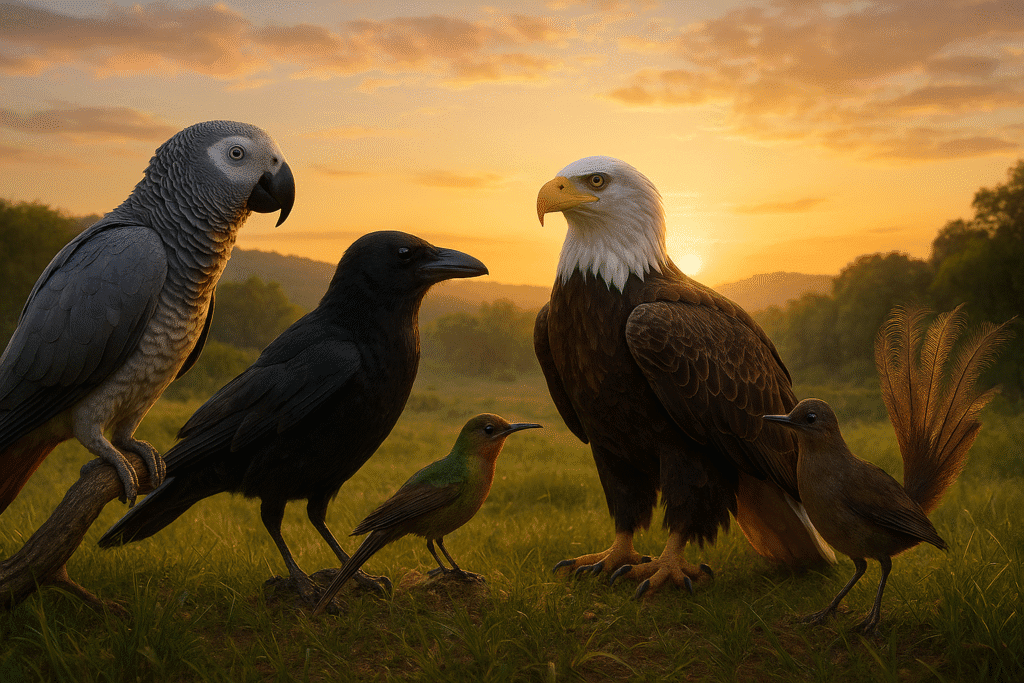
While many birds are renowned for their exquisite feathers or catchy melodies, some bird species have incredible skills that defy our knowledge of animal behavior. Birds have many skills beyond just flying and singing, from tiny hummingbirds with unmatched flight abilities to highly intelligent crows that make tools. These special abilities, which have been shaped by evolution and the need to survive, highlight the extraordinary ingenuity, adaptability, and problem-solving abilities that make birds among the most remarkable animals on the planet. The following five birds demonstrate these remarkable abilities, demonstrating that the term “bird-brained” is indeed a compliment.
African Grey Parrot (Speech)
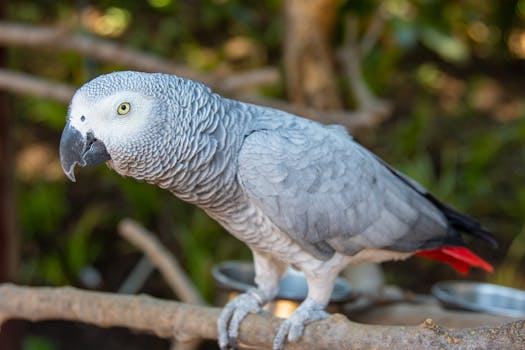
The ability of the African Grey parrot to mimic human speech is well known, but it goes far beyond simple imitation. These birds exhibit a level of intelligence that allows them to understand and use words in context; their cognitive capacities are often compared to those of a five-year-old human. Alex, the subject of Irene Pepperberg’s decades-long study, is the most well-known illustration of this. In addition to vocalizing hundreds of words and phrases, Alex was able to identify objects based on their color, shape, and material. As proof of his understanding of abstract concepts, he was even able to distinguish between “same” and “different,” as well as comprehend the idea of zero.
Crow (Tool Use)
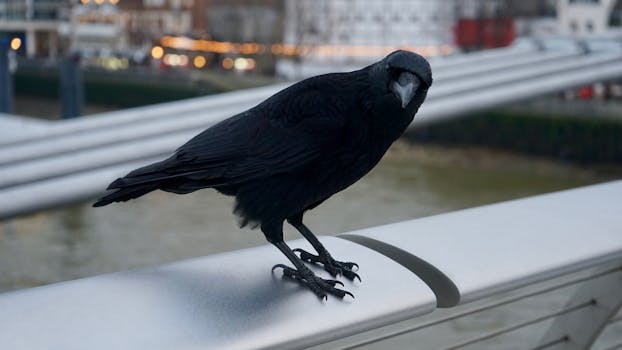
Crows are renowned for their extraordinary tool skills and are considered to be among the smartest birds on the planet. In the wild, crows have been observed bending twigs to extract insects from tree bark or dropping hard-shelled nuts onto roadways for approaching vehicles to crack open. Their problem-solving skills are similar to those of young children, and they can even plan several steps ahead to achieve a goal. Because of their ability to manipulate objects in their environment, which demonstrates both their high level of intelligence and adaptability, the crow is one of the most remarkable examples of innovation in the animal kingdom.
Crows are among the few non-primate animals that can use and even make tools, and they are renowned for their extraordinary intelligence. To extract insects and larvae from difficult-to-reach areas, New Caledonian crows, for instance, exhibit an incredible degree of ingenuity by forming twigs, leaves, and other plant matter into probes and hooks. They have been seen making tools with particular features, like barbs, to increase their productivity and using sticks to “fish” for grubs. In one well-known experiment, Betty, a New Caledonian crow, instinctively bent a straight piece of wire into a hook in order to get a bucket of food.
Eagle (Vision)

The term “eagle-eyed” comes from the legendary vision of eagles. A crucial adaptation for a predator that flies high, their vision is thought to be four to eight times sharper than the average human’s. Their amazing visual abilities are a result of several unique biological traits:
High density of photoreceptors: The concentration of light-sensitive cone cells in an eagle’s retina is significantly higher than in a human’s. They can now detect small prey, such as a rabbit, from up to two or three miles away thanks to their much higher resolving power for fine details.
The phrase “eagle-eyed” comes from the eagle’s legendary vision. The sharpness of their vision is thought to be four to eight times greater than that of the average human, which is a necessary adaptation for a predator that flies high. Their exceptional visual abilities are a result of several unique biological traits.
High photoreceptor density: Compared to a human’s retina, an eagle’s retina contains a significantly higher number of light-sensitive cone cells. They can now detect small prey, such as a rabbit, up to two or three miles away thanks to their significantly higher resolving power for fine details.
Hummingbird (Flight Skill)

Because of their unparalleled ability to fly, hummingbirds can engage in incredible aerial acrobatics, such as hovering for extended periods of time and flying backward. Several unique anatomical features enable this extraordinary talent. A hummingbird’s wings are attached to its body by a special ball-and-socket shoulder joint, in contrast to most birds, whose wings move mostly up and down. Together with exceptionally quick wing beats (up to 80 times per second), this permits the wing to rotate fully 180 degrees, allowing them to move their wings in a horizontal figure-eight pattern. As they consume nectar from flowers, this motion creates lift on both the forward and backward strokes, enabling them to stay perfectly motionless in midair.
Their ability to fly backward is a crucial foraging skill that allows them to quickly remove their bill from a flower before moving on to the next one. The hummingbird’s remarkable agility, speed, and accuracy make it the perfect miniature aerial acrobat.
Lyrebird (Sound Mimic)
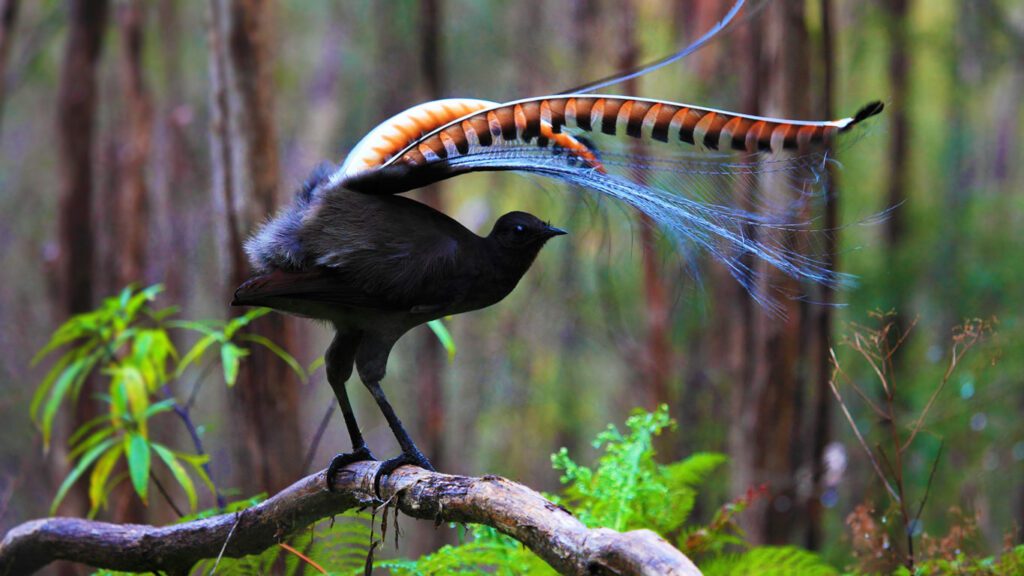
The lyrebird, which can mimic an incredible variety of sounds from its surroundings, is nature’s best mimic. These birds are remarkably accurate mimics of other birds, animals, and even man-made sounds like chainsaws, camera shutters, and automobiles. By fusing dozens of distinct sounds into intricate songs, male lyrebirds use their amazing vocal ability to entice potential mates. Not only is their mimicry remarkable, but it also reveals sophisticated memory, learning, and auditory abilities that are uncommon in animals. Hearing a lyrebird is similar to listening to a live orchestra of the forest, where both man-made and natural sounds meld to create an amazing symphony.
A master of vocal mimicry, the lyrebird of Australia is able to accurately mimic a wide variety of man-made and natural sounds. Although it is renowned for being able to mimic the calls of more than 20 different bird species, its abilities go well beyond birds. The elaborate courtship display of the male lyrebird, in particular, incorporates a sophisticated and alluring medley of mimicked sounds. Learn more about bird intelligence and behavior at the National Audubon Society.
Explore this related topic here:
Most Intelligent Animals on Earth
4 Amazing Reasons Why Penguins Don’t Feel Cold
Conclusion
Many birds have remarkable abilities that demonstrate an astounding degree of intelligence, adaptability, and specialized physiological prowess; they are by no means simple creatures of instinct. The idea that birds are “bird-brained” is challenged by the African grey parrot’s cognitive and linguistic abilities, the crow’s intricate toolmaking, and the eagle’s unmatched visual acuity. Evolution has honed certain traits for survival, communication, and even courtship, as evidenced by the hummingbird’s amazing flight skills and the lyrebird’s perfect imitation. These five birds’ diverse skills—intelligence, vision, flight, mimicry, and tool use—serve as a potent reminder of the amazing diversity and adaptability found in the natural world.



p13auj
kagwe3