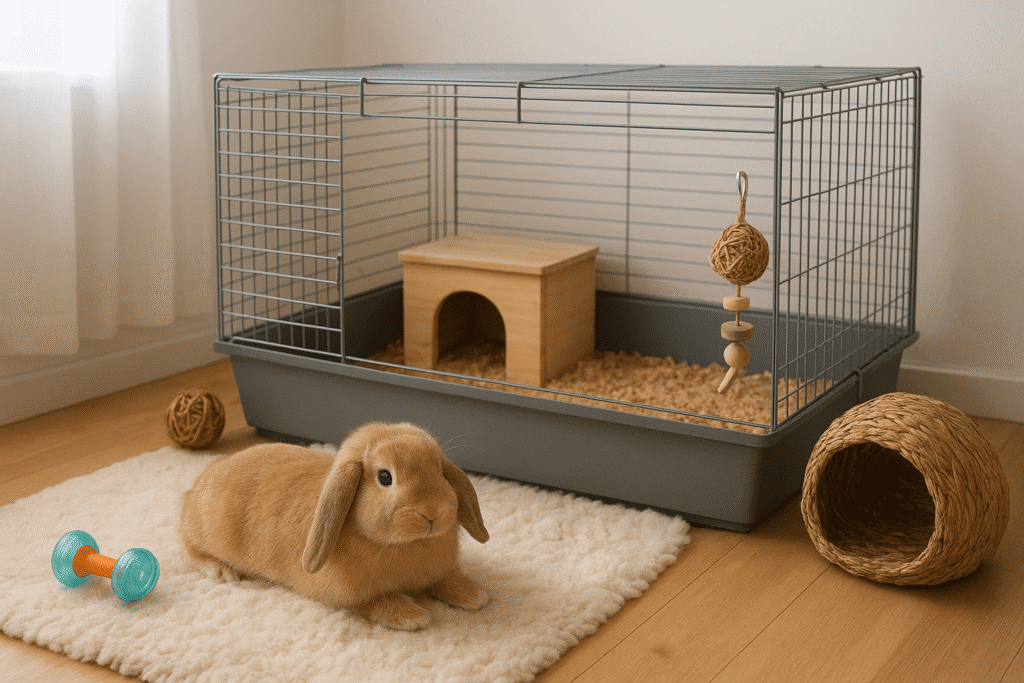

Intro
Bringing a pet rabbit into your home can be a joyful and rewarding experience, but to protect their safety and well-being, you must prepare thoroughly. Because of their natural curiosity, energy, and vulnerability, rabbits may become domestic threats if their environment isn’t prepared. Giving a pet rabbit a safe, comfortable environment in which to explore, exercise, and express their natural behaviors while being protected from potential hazards is more important than giving them food and water. If you set up your rabbit correctly, you can give them a happy, healthy home where they can thrive.
The health and well-being of pet rabbits depend on having a safe and spacious enclosure. By protecting them from predators, inclement weather, and household hazards, a safe home accommodates their natural prey-animal nature. Building a suitable habitat requires much more than just a simple hutch; you must create a large, lush area where your rabbit can run, jump, hide, and explore without fear. Whether housed indoors or out, a bunny requires a well-designed home with chew-resistant materials, secure locks, and plenty of space for exercise.
Cage Setup
A good cage or enclosure is the cornerstone of a safe and comfortable home for a pet rabbit. The rabbit should be able to move freely, hop around, stretch out completely, and stand on its hind legs without touching the top thanks to the ample space it provides. Multi-level cages can provide more space for exploration, even though ramps should be non-slip and soft to prevent injuries. Solid flooring is required to protect sensitive feet because wire floors can cause sores. Soft bedding such as hay, straw, or paper-based materials can be added to create a cozy resting area.
Floor Padding
Safe and cozy flooring is crucial for the health and welfare of pet rabbits. The painful and dangerous foot sores known as ulcerative pododermatitis, or “sore hocks,” can be caused by exposed wire-bottomed cages, hard tile, or slippery plastic. Their sensitive feet are cushioned by the perfect padding, which is also safe to chew, absorbent, and easy to clean. With the correct floor padding, you can create a safe, welcoming space where your rabbit can play, stretch, and move around without feeling uncomfortable.
An essential component of guaranteeing a pet rabbit’s comfort and safety is floor padding. Because rabbits’ feet are so sensitive, prolonged contact with hard or wire surfaces can result in painful conditions like sore hocks. Cover the floor of their enclosure with a thick layer of padding or bedding to protect their feet. Hay, straw, paper-based bedding, and fleece liners are additional choices. Although hay or straw also promote chewing and foraging behaviors, fleece’s softness, washability, and reusability make it an especially effective enrichment. Dusty, chemically treated, or mold-prone materials should be avoided, as they may cause respiratory or other health problems.
Toys and Play Area
Rabbits are intelligent, active creatures that require mental and physical stimulation to maintain their happiness and well-being. Boredom and destructive behavior can be avoided with a safe play area and a variety of toys. To keep your rabbit’s teeth healthy, choose toys made of hay, untreated wood, or natural fibers. Paper towel rolls, cardboard boxes, and tunnels are also excellent low-cost toys. To allow your rabbit to run, jump, and explore without any restrictions, provide them with a safe, enclosed space indoors or a monitored outdoor pen. Look for things that could be chewed or swallowed, electrical cords, and poisonous plants.
Your rabbit’s mental and physical well-being depends on having a dedicated play area with a range of safe, entertaining toys. Providing outlets for rabbits’ innate chewing, digging, and foraging behaviors helps them avoid boredom and bad habits. It should be a monitored and stimulating area for your bunny to explore, whether you use a playpen or a “bunny-proofed” room.
Diet Tips
Maintaining your rabbit’s health, vitality, and absence of digestive issues requires a well-balanced diet. Fresh hay, like timothy or orchard grass, should be the mainstay of a rabbit’s diet because it aids in digestion and keeps teeth naturally worn down. Fresh vegetables should be provided every day; leafy greens such as parsley, cilantro, and romaine lettuce are great options, and fruits and starchy vegetables should only be served occasionally. Small amounts of high-quality rabbit pellets can be added to provide extra nutrients, but stay away from mixes that contain seeds or dried fruits, as these can be harmful. Fresh, clean water should always be available in a heavy bowl or bottle, and it should be cleaned every day.
One of the most important factors for your rabbit’s health and longevity is a healthy diet, which supports the digestive and dental systems. The most crucial element is a steady supply of fresh, high-quality hay because, as herbivores, their digestive systems are made to handle a diet high in fiber.
Cleanliness
Keeping your rabbit’s surroundings clean is essential to its comfort and well-being. Unpleasant odors, parasites, or even infections can quickly develop in a dirty cage. Every day, spot-clean your rabbit’s living area by clearing the litter box of waste, uneaten food, and dirty bedding. At least once a week, perform a deeper cleaning by replacing all of the bedding or floor padding, cleaning the cage’s surfaces with a gentle, pet-safe cleaner, and washing the food and water dishes. Due to their sensitive respiratory systems, rabbits should not be cleaned with strong chemicals or anything that smells strongly. Maintaining a clean environment and minimizing shedding can also be achieved by routinely brushing away loose fur and grooming your rabbit.
Urine can accumulate bacteria and ammonia, which can lead to respiratory and other health issues. This can be avoided with regular cleaning. It is advised to deep clean the enclosure every one to two weeks in addition to spot cleaning it every day. For more expert advice on creating a safe and healthy living space for your bunny, check out this Comprehensive Rabbit Home Care Guide.
You might also be interested in reading:
5 Ways to Keep Your Pet Active and Happy
Conclusion
A pet rabbit’s living area, diet, and daily care all need to be carefully considered in order to provide a secure and caring environment. You can keep your rabbit healthy, content, and active by providing a large cage, soft flooring, stimulating toys, a balanced diet, and a clean environment. In addition to keeping your pet safe, a well-designed habitat fosters a closer bond between pet and owner by enabling your pet to exhibit their natural behaviors. Your rabbit can flourish and bring years of happiness to your home if you give it the attention and care it needs.



Pingback: 5 Ways to Keep Your Pet Active and Happy - Wildpaw.info
pufk54