
Intro
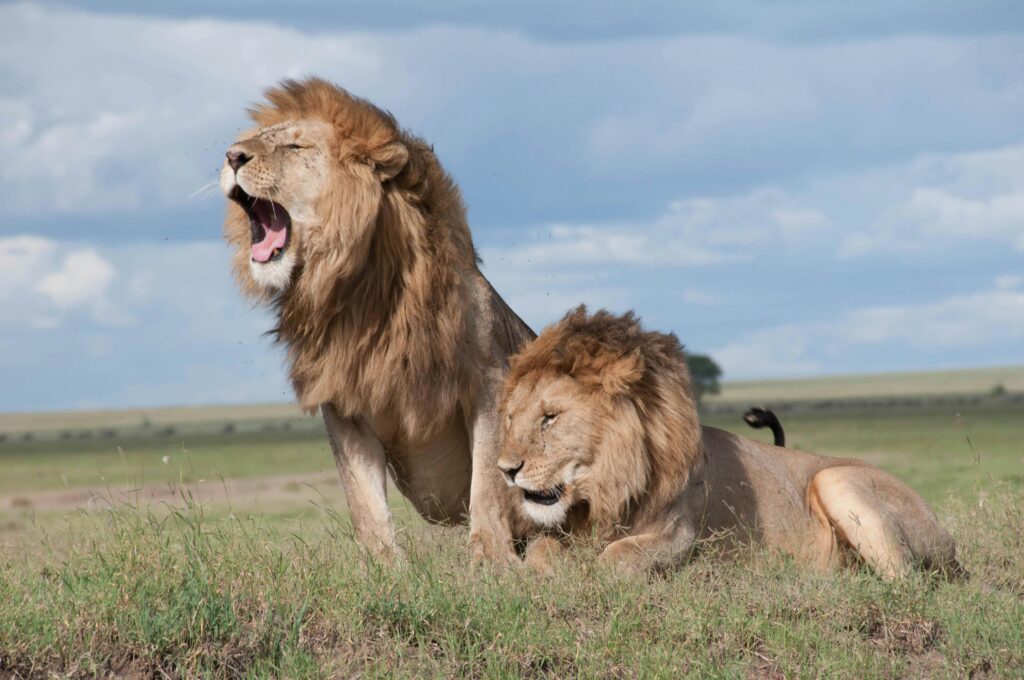
Lions use a variety of vocalizations, such as growls and snarls to convey aggression or displeasure, softer contact calls to maintain contact with cubs, and a powerful roar to entice mates and ward off rivals. Body Language: A pride leader using its tail to guide other lions or a flicking tail to show annoyance are examples of subtle body language. A dark, full mane is one example of a visual cue that lets others know a man is strong and healthy.
Roaring
A lion’s roar is a distinctive sound that represents strength, defending one’s territory, and communicating with other members of the pride. As a sign of presence, a warning to competitors, and a means for members to find one another, this deep, resonant vocalization can be heard for miles across the African savanna, with some reports stating it can travel up to 8 km. A powerful and breathtaking experience, roaring is frequently characterized as a physical vibration that commands attention and shakes the chest. Communication: One important way to communicate is by roaring. Lions use it to stay in touch with their mates and locate members of their pride, particularly when the pride is divided for hunting. Auditory reach: Due to the lion’s exceptional hearing and the force of its roar, a lion’s roar can be heard up to 8 kilometers away in open terrain.
Scent Marking
The most popular technique, used by both men and women, is urine spraying. A lion will spray a mixture of urine and gland secretions after backing up to a noticeable object, like a rock, tree, or bush. In order to demonstrate their dominance and territorial boundaries, males are known to spray more frequently.
Lions rub their faces and bodies against plants and other objects using scent glands on their chin, lips, and cheeks. Their olfactory calling card is enhanced by the sebaceous secretion left behind by this action. Clawing trees: Lions scratch tree trunks to leave behind scents from interdigital glands in their paws, in addition to keeping their claws sharp. Additionally, these scratches serve as a visual cue that the lion is present and large. Defecation: Although less common than other means, lions also prominently mark important territorial boundaries with their feces.
Body Language
Body language is a subtle yet effective means of communication for lions. They can silently convey their intentions, feelings, and social status through their posture, movements, and facial expressions. When a lion flattens its ears or flashes its teeth, for instance, it may be expressing aggression or dominance and telling others to back off. However, affectionate gestures such as leaning against another lion, licking, or gentle head rubs help to fortify ties within the pride. Depending on the circumstance, a lion may crouch and lower its body to indicate that it is ready to hunt or play.
Social Bonding
Social bonding is essential for lion communication and is also required to maintain the pride’s organization and cohesion. Lions are better able to work together to raise cubs, defend their territory, and hunt because they are more gregarious and live in closer-knit groups than most other big cats. Lions establish and maintain these relationships mainly through physical contact and grooming behaviors. Lions lick and clean each other’s fur, especially in the hard-to-reach places around the head and neck, a practice known as allogrooming. This behavior not only promotes better hygiene but also reduces stress and boosts pride members’ self-esteem. For detailed insights on lion behaviour and vocal patterns, visit
👉 National Geographic – Lion Communication
Don’t miss this related post:
7 Most Dangerous Wild Animals in Africa
3 Real-Life Animal Heroes from Around the World
Conclusion
To preserve their social structure, protect their territory, and coordinate within their pride, lions employ a sophisticated communication system that includes body language, vocalizations, and scent marking. Their social interactions are structured around a complex interplay of sensory cues, as evidenced by their dynamic communication, which combines loud roars to announce their presence with softer, more intimate signals like head rubs and nuzzles to express affection and strengthen bonds. From the well-known roar for long-distance communication to purrs, grunts, and softer contact calls for closer encounters, lions employ a variety of vocalizations. Body Language: Lions communicate intent, mood, and warnings through their posture, ear and tail movements, and facial expressions. Visual cues are crucial in this scenario.


Pingback: 3 Inspiring Real-Life Animal Heroes from Around the World