
Intro
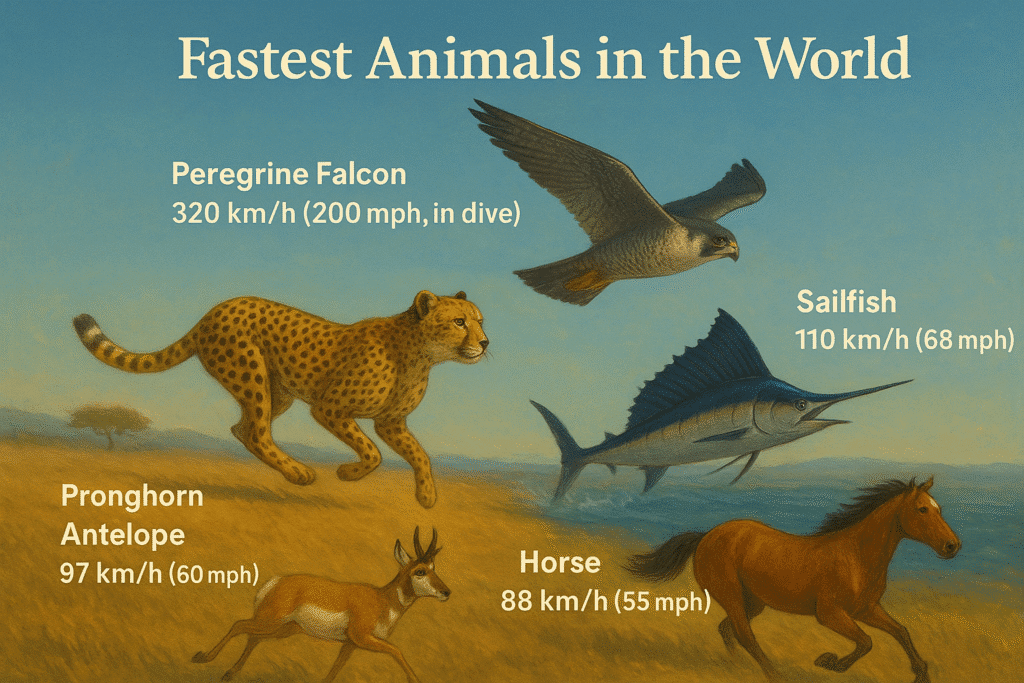
Some animals move very quickly! They are faster than we can imagine at running, flying, or swimming. Being quick enables them to avoid danger or catch food. The fastest animals on land, in the air, and in the water will be covered in this topic. Prepare to meet the animal world’s speed champions!
Cheetah
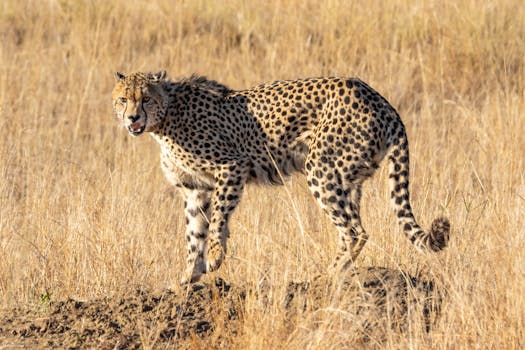
The cheetah is the fastest land animal in the world. It can run up to 110 kilometers per hour (about 70 miles per hour), but only for a short time. The cheetah uses its amazing speed to catch fast animals like deer and rabbits. It has a slim body, long legs, and a long tail that helps it turn quickly while running. Cheetahs are usually found in the grasslands of Africa. Unlike lions, cheetahs do not roar. They make soft sounds like purring and chirping. Sadly, cheetahs are in danger because their homes are being destroyed and there are fewer safe places for them to live.
Peregrine Falcon
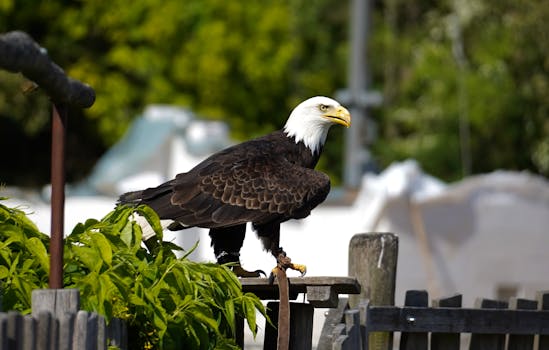
When it stoops (dives) at prey, the peregrine falcon, a crow-sized bird of prey, can reach speeds of up to 200 mph, making it the fastest animal on the planet. Its bluish-gray back, cream-colored chest with dark barring, dark “helmeted” head with thick black “moustache,” and bright yellow feet give it a unique look. These versatile birds mainly hunt other birds in mid-air and can be found in a variety of environments, including urban buildings and natural cliffs. The adult peregrine falcon’s appearance includes a dark head with a prominent “moustache” marking, a cream-colored underside with dark bars, and a bluish-gray back and wings. In general, females are bigger than males. Over time, the juvenile’s brown feathers with vertical breast streaks transform into the adult pattern. Habitat: They are extremely adaptable and can be found on all continents except Antarctica. They nest on man-made structures like bridges and skyscrapers in urban areas, as well as on natural cliff faces close to water and forests.
Sailfish
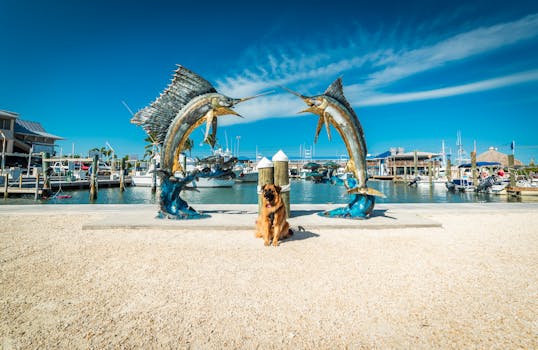
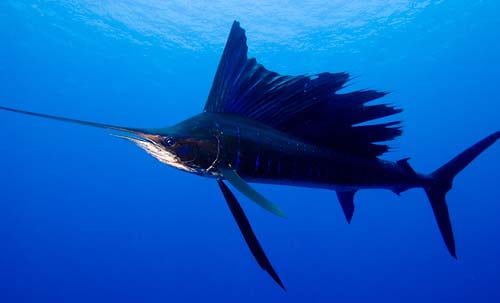
The elongated bill, or rostrum, and large, “sail-like” dorsal fin of sailfish, which are regarded as the fastest fish in the ocean, make them easily identifiable. Living in temperate and tropical waters across the world, these billfish are proficient predators that hunt in schools and herd schools of prey fish with their fins. They can reach speeds of up to 68 mph (110 km/h) and have a dark blue body that turns silver on the belly.
Sailfish are characterized by a prominent, frequently large dorsal fin that can extend the full length of their back and a dark blue body that turns silver towards the belly. They also have bills that resemble spears.
Pronghorn Antelope
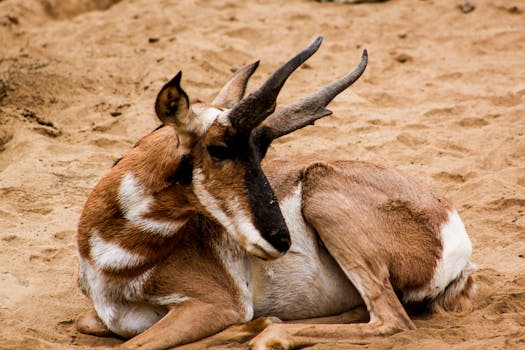
With a top speed of 60 mph, the pronghorn antelope is a rare North American mammal that is well-known for its long migrations, especially in Wyoming. They are more closely related to giraffes than true antelopes. Although they are prey to predators like coyotes and live in herds, they use their superior vision and communication skills—such as flashing their white rumps—to warn one another of danger. Males develop larger, branching horns that are shed once a year, but both sexes have horns. Speed and migration: With top speeds of 60 mph, the pronghorn is the fastest land mammal in North America. Sometimes travelling more than 150 miles each way between their summer and winter grounds, they are renowned for making the longest land migrations in the lower 48 states. Diet: Their main food sources are grasses, shrubs, and forbs; they can obtain a large portion of their water from these plants.
Lion
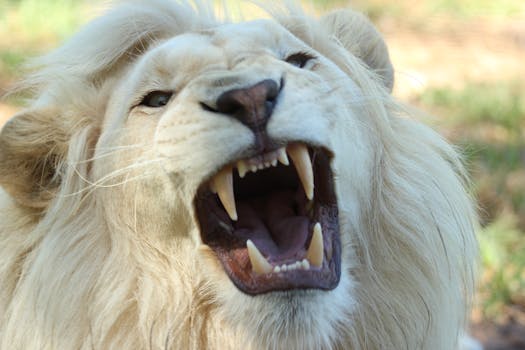
Large, strong, and gregarious, lions are distinguished by their impressive roar and the characteristic mane of the male. One characteristic that sets these apex predators apart from other cats is their organization into prides, or family groups. The male’s main responsibility is to protect the pride’s territory from competitors, while the lioness usually leads the hunt for large prey like zebra and wildebeest. Although they were once widespread throughout Africa, Asia, and Europe, Asiatic lion populations are now mostly restricted to isolated regions of sub-Saharan Africa, with the exception of a tiny population that still exists in India’s Gir Forest.
Black Marlin
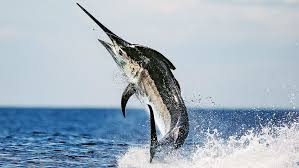
The black marlin is distinguished from other marlins by its broad, stiff pectoral fins, which cannot be folded flat against the body. It typically has a deep, streamlined body that is dark blue to black on the upper side and fades to a silvery-white on the belly. It also typically lacks the vertical stripes that are present on other marlin species. It is a vicious predator that uses its sharp, pointed bill to slash and stun prey like small tunas, mackerel, and squid. Black marlins’ aggressive fighting style and acrobatic leaps make them a challenging target for sport fishermen. The enormous size and remarkable speed of the black marlin (Istiompax indica) make it a formidable pelagic predator. It is a very popular game fish that can be found in tropical and subtropical waters in the Pacific and Indian Oceans. With adult females being noticeably larger than males and reaching lengths of over 4.5 meters (15 feet) and weights of over 700 kilograms (1,500 pounds), this species is among the largest bony fish in the world.
Ostrich
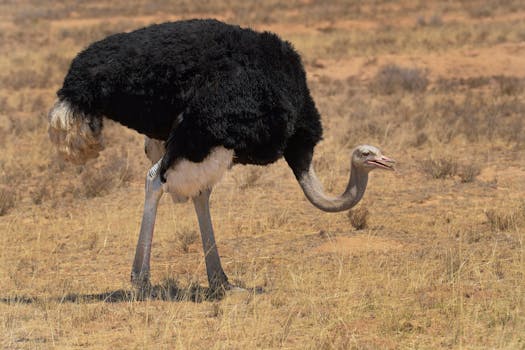
The ostrich, which is indigenous to Africa, is the biggest and heaviest bird. It cannot fly, but it can run very quickly. These birds are renowned for their speed and strong defensive kicks, and they have long necks and legs. The world’s largest egg producer, ostriches are omnivores that consume grasses, plants, and insects. They can be found in zoos all over the world and are raised for their meat, skin, and feathers. Look: Females are mottled brown or grey, while males are usually black with white feathers. Long necks, small heads, and strong, feathered legs with two toes on each foot are characteristics shared by both sexes.
Swordfish
Fast, highly migratory, and widely distributed ocean predators, swordfish are distinguished by their long, sword-like bill, which they use to slash and stun prey such as smaller fish and squid. The world’s temperate and tropical oceans are home to these strong fish, which can grow to a length of over 14 feet and reach speeds of up to 50 mph. Despite having few natural enemies and being apex predators, swordfish are threatened by environmental problems and commercial fishing. Physical attributes and modifications “Sword”: Instead of spearing prey, the long, flat bill is used to slash it. Speed: With a top speed of fifty miles per hour, they are among the swiftest fish in the ocean.
Greyhound
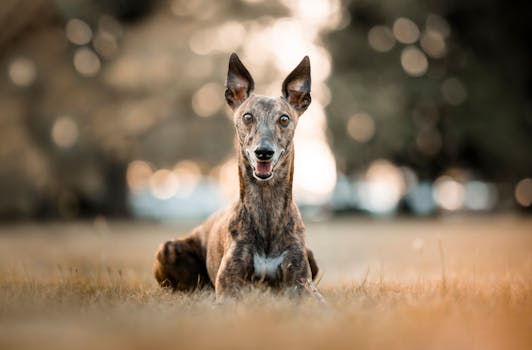
Despite being the fastest dog in the world, the gentle, elegant, and ancient greyhound is also known for being a devoted “45-mph couch potato.” Originally bred as a sighthound to hunt game by sight rather than scent, the greyhound is distinguished by its sleek, muscular, and aerodynamic body. The breed is surprisingly calm and prefers to spend most of the day sleeping and relaxing, even though it has an athletic physique and a history of racing and coursing.
Greyhounds are affectionate with their families but may be reticent around strangers due to their mild and sensitive temperament. Because of their strong prey drive, which can cause them to chase after small, swift objects, they need to be trained with patience and positivity.
Horse
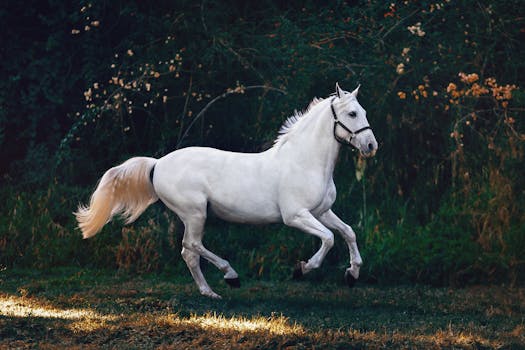
One-toed, hoofed, and domesticated, the horse (Equus ferus caballus) is renowned for its strong physique and lengthy history of cohabitation with humans. Horses have been used for transportation, agricultural work, and sports and leisure companionship for thousands of years. Though they are loosely classified by temperament as spirited “hot-bloods,” calm “cold-bloods,” and a combination of the two known as “warmbloods,” the more than 300 breeds of horses that currently exist reflect the deep and varied relationship between humans and horses. There are several notable physiological traits of horses. Because they are prey animals with an innate “fight-or-flight” response, they can sleep upright and have a strong sense of awareness. They can detect threats from a variety of perspectives thanks to their remarkable hearing and almost 360-degree vision. A foal, or young horse, can stand and run within hours of birth. Horses form complex social networks and close bonds with humans and other horses as a result of being herded. They can be trained for a variety of occupations, such as therapy and law enforcement, thanks to their intelligence and social skills. Explore detailed insights on Fastest Animals in the World by Britannica
Here’s another article you may find useful:
Most Intelligent Animals on Earth
7 Most Dangerous Wild Animals in Africa
Scariest Ocean Creatures You Didn’t Know Exist
Conclusion
There are several notable physiological traits of horses. Because they are prey animals with an innate “fight-or-flight” response, they can sleep upright and have a strong sense of awareness. They can detect threats from a variety of perspectives thanks to their remarkable hearing and almost 360-degree vision. A foal, or young horse, can stand and run within hours of birth. Horses form complex social networks and close bonds with humans and other horses as a result of being herded. They can be trained for a variety of occupations, such as therapy and law enforcement, thanks to their intelligence and social skills.